

2026 Hyundai Tucson vs CR-V: Two Rivals
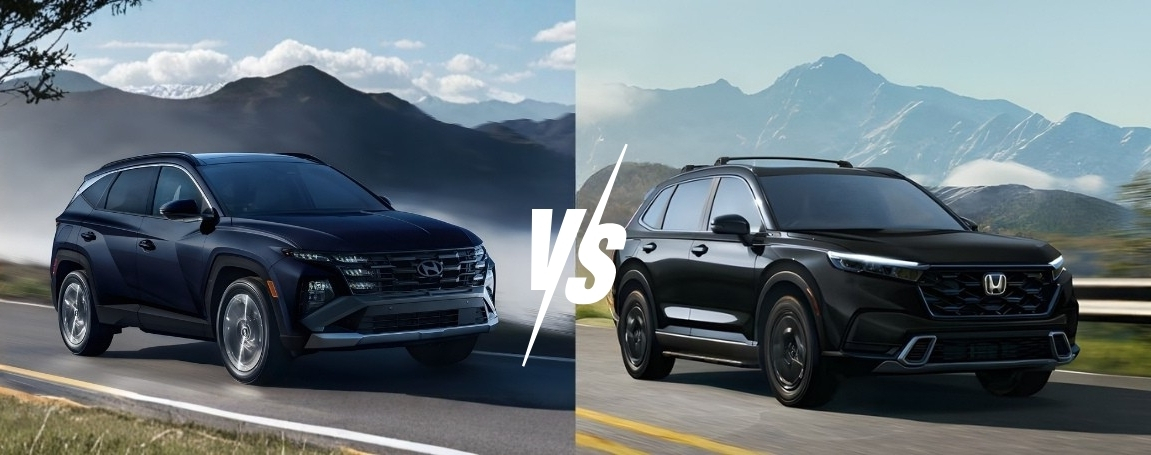
Compact SUVs continue to dominate Canadian roads thanks to their balance of efficiency, space, and all-season capability. Two of the most talked-about options in this category take very different approaches to everyday driving. One leans into bold styling, modern tech, and flexible powertrain choices, while the other focuses on long-term reliability, smooth comfort, and practical usability for families. For drivers on Vancouver Island, the decision often comes down to personality versus proven consistency.
Design Language: Bold Modern Edge vs Timeless Simplicity
The more design-forward SUV stands out immediately with its sharp parametric grille, integrated lighting elements, and sculpted body surfaces. Its appearance feels futuristic, with hidden lighting details that become visible only when illuminated, giving it a distinctive road presence.
The rival SUV takes a more conservative approach with a clean, aerodynamic shape designed to reduce wind noise and improve efficiency. Its styling is understated yet functional, appealing to buyers who prefer design longevity over bold experimentation.
Both models sit in the same compact footprint, but the visual impression differs significantly—one feels expressive and modern, the other calm and familiar.
Performance and Powertrain Choices
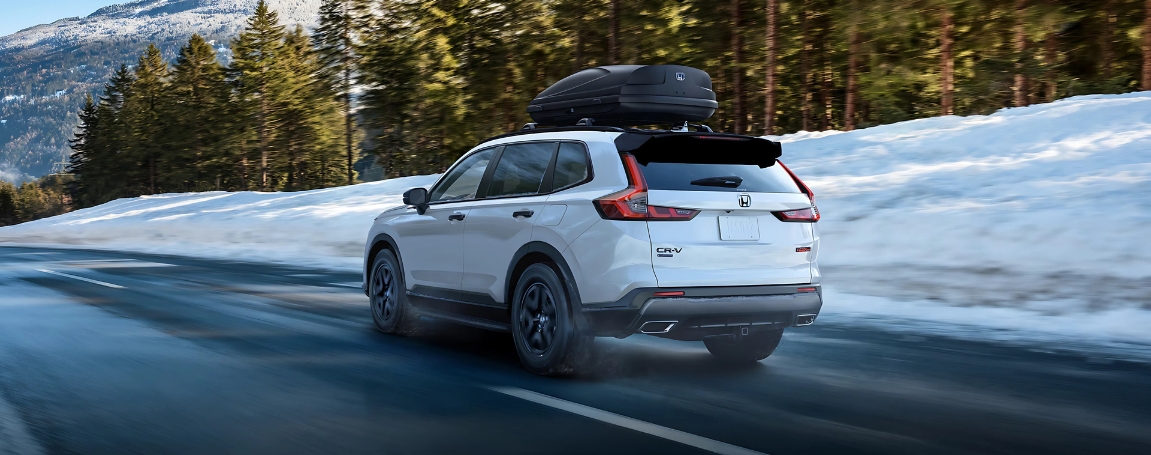
The Tucson Preferred is powered by a naturally aspirated 2.5-litre four-cylinder engine that produces 187 horsepower and 178 lb-ft of torque at 4,000 rpm. Paired with an eight-speed automatic transmission, it delivers adequate performance for everyday city driving and highway cruising. However, it may feel a bit underpowered when stacked against turbocharged competitors. In the same way, its handling is competent but doesn’t particularly stand out.
The Hyundai option stands out by offering multiple configurations, including hybrid and plug-in hybrid variants that significantly improve fuel efficiency and reduce emissions. In hybrid form, combined fuel consumption can drop into the low 6.7 L/100 km range, making it appealing for long-distance commuters.
The CR-V is powered by Honda’s turbocharged 1.5-litre four-cylinder engine, which produces 190 horsepower and 179 lb-ft of torque between 1,700 and 5,000 rpm. It’s a refined and responsive setup, offering strong midrange performance and smooth power delivery. Staying true to Honda’s reputation, the CVT operates efficiently and keeps engine noise in check during normal driving, only becoming more noticeable under heavy throttle. On the road, the CR-V’s chassis strikes a solid balance, providing a comfortable ride while still maintaining capable handling.
Interior Experience and Comfort Levels
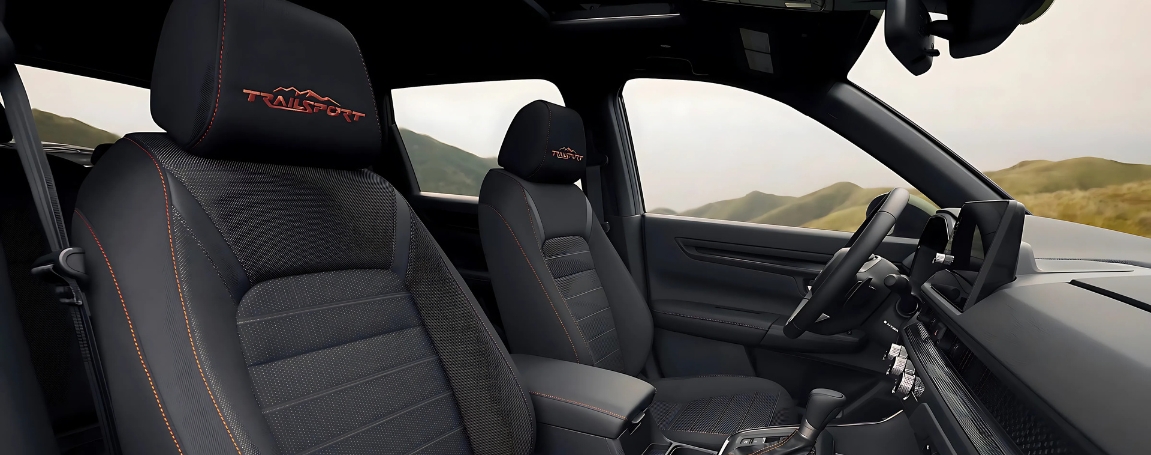
Inside Tucson, the cabin design feels tech-forward and minimalist, with a wide digital display layout, available dual 12.3-inch screens, and a clean horizontal dashboard design. Ambient lighting and premium material upgrades enhance the sense of space and sophistication.
The alternative CR-V prioritizes ergonomic simplicity and long-term comfort. Controls are logically placed, visibility is excellent, and seating comfort is designed for extended family travel. While less dramatic in appearance, its cabin is extremely user-friendly.
Cargo capacity is strong in both, with rear seats that fold flat for larger items. The Hyundai model slightly emphasizes flexible configurations, while the Honda focuses on consistent, easy-to-access storage space.
Technology and Connectivity
The tech-focused SUV delivers a more advanced digital ecosystem. Features such as wireless Apple CarPlay, Android Auto, digital instrument clusters, and available head-up displays create a highly connected driving experience. Over-the-air updates and advanced voice control further enhance usability.
The rival SUV offers a more straightforward interface with reliable infotainment performance, standard smartphone integration, and intuitive menu structures. It is designed for drivers who prefer simplicity over feature-heavy systems.
Both include modern safety suites, but calibration differs. The Hyundai system often feels more intervention-focused with advanced highway assist features, while the Honda system emphasizes smooth, unobtrusive driver support.
Safety and Driving Confidence
Both SUVs include essential safety technologies such as adaptive cruise control, lane-keeping assist, forward collision avoidance, and blind-spot monitoring.
The Hyundai model enhances safety with more advanced highway driving assistance features and a broader suite of camera-based systems in higher trims. The Honda model, meanwhile, is known for its consistency, reliability, and predictable driver-assist behavior over long-term ownership.
Everyday Usability in Canadian Conditions
For drivers across British Columbia, winter traction and wet-road stability are important considerations. Both SUVs offer available all-wheel-drive systems designed to handle rain, snow, and gravel roads common on Vancouver Island.
The Hyundai model’s available hybrid system improves efficiency for daily commuting, while the Honda model focuses on balanced traction and durability for long-term ownership confidence.
Ride comfort is smooth in both, but the Honda leans slightly softer, while the Hyundai feels more responsive and composed during quick direction changes.
Vehicle comparison chart
| Features | Tucson | CR-V |
| wheels | Up to 19 inches | |
| Fuel efficiency combined | 8.8 L/100 km Combined | 7.8 L/100 km combined |
| Fuel Tank Capacity | 54 litres | 53 litres |
| Cargo Space | 2,119 litres | 2166 litres |
| Engine Options | Gasoline, HEV, PHEV | Gasoline, HEV |
| Speakers | Bose® AM/FM/HD Radio/MP3/XM premium audio system with 8 speakers | 12 BOSE® Premium Sound System |
| Price | $38,096* | $46,521* |
Which SUV Fits Your Lifestyle?
Drivers who prioritize modern styling, hybrid efficiency options, and advanced digital features may find the Hyundai model more appealing. It suits tech-focused buyers, commuters, and those wanting a more expressive design on Vancouver Island roads.
The Honda alternative is ideal for families and long-term owners who value reliability, easy maintenance, and a calm, predictable driving experience over time.
Explore Your Next SUV in Nanaimo
If you are comparing compact SUV options in British Columbia and want to experience both technology-driven innovation and proven everyday reliability, visit Wheaton Hyundai in Nanaimo. Explore current inventory, compare trims, and discover which SUV better fits your lifestyle on Vancouver Island.